Bosphorus transit agent
A Bosphorus transit agent handles the notifications and communication for a vessel passing the Turkish Straits. This page explains the Montreux regime, the SP-1 plan, VTS, pilotage and typical delays in general terms. Rules and procedures are updated by the authorities, so confirm current details before every transit.
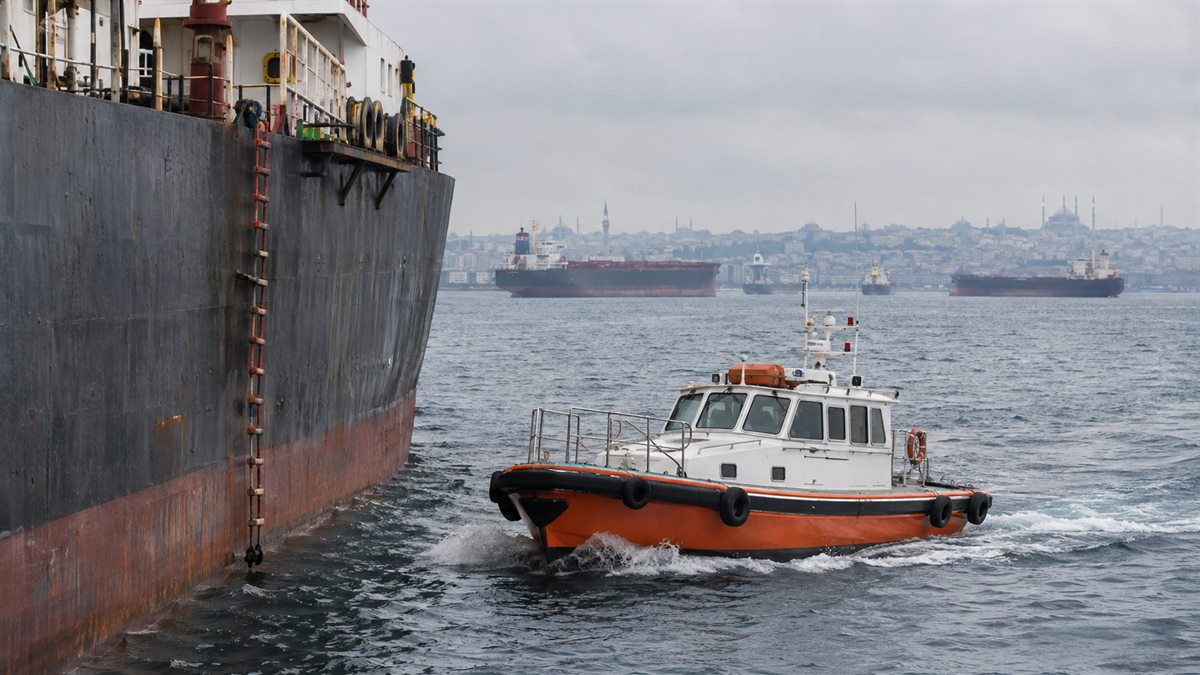
What does a Bosphorus transit agent do?
A transit agent submits the vessel's information to the Turkish Straits traffic service before passage, advises the master on the procedure, monitors the queue and weather, and keeps the owner informed. The agent can also arrange pilot, supplies, crew changes or repairs at anchorage when a transit is combined with other needs.
Many calls are pure transit, where the agent's job is clear communication and timing.
What is the Montreux Convention?
The Montreux Convention of 1936 governs passage through the Turkish Straits. It guarantees free passage in peacetime for merchant ships, subject to Turkish safety and health rules, and sets separate conditions for warships. It is the legal basis for the regime, while traffic rules are issued by the national authorities.
This page is not legal advice; owners with specific questions should consult their legal adviser or P&I club.
Which authority manages traffic in the Turkish Straits?
Traffic is managed by the Turkish Straits Vessel Traffic Services, which operate under the Directorate General of Coastal Safety. The service monitors ships, issues instructions and publishes the rules for transit. The agent communicates on behalf of the vessel but the master stays responsible for navigation decisions.
The master must follow VTS instructions during passage.
What is the SP-1 notification?
The SP-1 is the first report, a sailing plan with vessel particulars, cargo and passage intentions, sent before entering the Straits. The agent usually prepares and submits it using the master's data. Further reports are sent at designated positions during passage, and the exact format should be taken from the current rules.
Check the latest rules for deadlines and content before each transit.
How early should the transit notification be sent?
Notification deadlines are set by the Turkish authorities and can change, so ask the agent for the current timing for your vessel type and direction. As a general practice, send particulars as early as the voyage plan is known, and update the ETA if it moves, to avoid missing the slot.
Do not rely on a fixed number of hours from older guides.
Is pilotage compulsory in the Bosphorus?
For ships calling at Marmara ports, pilotage is reported to be compulsory. For ships in transit, pilotage is reported to be optional, although recommended by many operators, especially for large vessels. Rules can change, so confirm the current requirement with the agent or the authorities before the voyage.
How long does a Bosphorus transit take?
The passage itself takes a few hours for a typical merchant ship, depending on speed and current. Waiting for the passage window can add much more. These numbers are planning ranges and vary with traffic, visibility and vessel type. The agent updates the master on the likely start time.
The Dardanelles passage is separate and adds its own time.
Why can transits be suspended or delayed?
Transits may be suspended or limited because of strong currents, wind, poor visibility, accidents, traffic density or priority movements. Large or dangerous cargo vessels can face restrictions on one-way traffic. Owners should include possible waiting time in the schedule and charter terms.
Delay is common and is not a fault of the agent; early information helps minimise it.
Can ships anchor and wait near the Straits?
Vessels may wait at designated anchorages near the entrances, following VTS instructions and port rules. Anchoring areas can be busy, so the agent reports vacancies and queue position where available. Supplies, crew change and repairs at anchorage can be arranged by launch subject to approvals.
What about the Dardanelles and Çanakkale?
The Dardanelles is the southern strait, with its own notification points and VTS. Çanakkale is the local port and anchorage area. Vessels transiting both straits report at each stage, and the agent keeps the sequence consistent. Delays in one strait can affect the schedule in the other.
What documents and information are needed for transit?
Prepare vessel particulars, IMO number, flag, tonnage, dimensions, draft, cargo and dangerous goods information, crew details, ETA at the Straits and intended speed. The agent will tell you if additional documents are needed. Keep contact data for the master and the technical office current in the system.
- Vessel name, IMO, flag, GT, LOA, beam, draft
- Cargo type and dangerous goods declaration if any
- ETA at the Straits and direction
- Master and office contacts
Are there special rules for tankers and dangerous cargo?
Tankers, gas carriers and vessels with dangerous cargo are subject to stricter traffic management, such as one-way traffic or daylight-only transits in certain conditions. The regulations and guidelines issued by the authorities and industry bodies apply. Confirm current limits for your ship type before fixing the voyage.
Industry guidance such as the Turkish Straits passage planning documents can help, but always check the latest edition.
What can go wrong, and how does the agent help?
Typical problems are late or incomplete notices, missed slots, changes in ETA, engine or steering failure and extended waiting. The agent corrects data quickly, communicates with VTS channels, relays instructions and informs the owner. Emergency situations are managed by the master and the authorities.
Owners should keep P&I contact details ready for any incident.
Can supplies, crew change or repairs be combined with a transit?
Yes. A vessel waiting or anchored near Istanbul can receive provisions, spares or services by launch, and crew can join or leave through the port. These additions need advance planning because they depend on approvals, weather and boat availability, and are separate from the passage itself.
Does transit agency differ from port agency?
Yes. Transit agency covers passage without a commercial call, where the main tasks are notices, communication and monitoring. Port agency covers entering a port, berth, cargo and clearance. Some voyages need both, for instance when a ship transits and then calls at a Marmara or Black Sea port.
What do I need to check before booking a transit?
Check the current rules for notification, pilotage and ship type restrictions, the weather and traffic outlook, charter party clauses on delay, and the validity of certificates. Confirm the agent's role in writing, including who transmits reports and who bears costs for waiting.
Pass the agent your voyage plan as early as possible.
How to request a Bosphorus transit agent quote?
Email [email protected] with the vessel particulars, direction, expected date at the Straits, cargo type and any supplies or crew change you want to combine. A written quote follows, naming the executing agent and the services included. SMETRD does not publish tariffs.
Frequently asked questions
What governs passage through the Bosphorus?
The Montreux Convention of 1936 sets the regime, and Turkish regulations with the Straits traffic service manage safety and traffic.
What is SP-1?
SP-1 is the first notification, a sailing plan sent before entering the Straits. The agent normally prepares it. Check current content and deadlines.
Is a pilot required for transit?
Reported as optional for ships in transit and compulsory for ships calling at Marmara ports. Confirm the current rule before the voyage.
How long should I plan for a transit?
The passage takes a few hours, but waiting can add substantially more. Treat any duration as a planning range.
Can transit be suspended?
Yes, due to weather, visibility, current, traffic or incidents. Include possible delay in the schedule.
Can you arrange supplies while the ship waits?
Often yes, by launch to anchorage, with approvals and lead time. Ask for confirmation in the quote.