Port agency services in Turkey
This page lists the main Turkish port areas and the port services an agent arranges during a call: mooring, pilot, tugs, waste, health and customs. SMETRD coordinates these from Istanbul with local agents. Port rules and capacity vary, so every point below is confirmed per call.
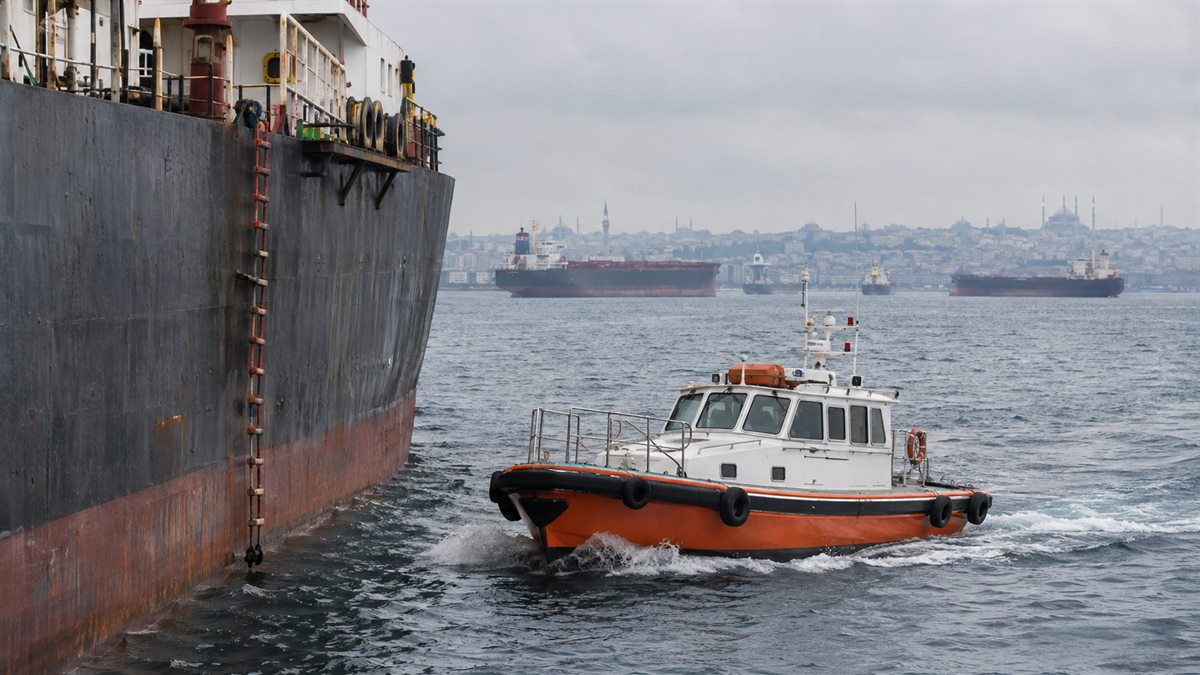
What are port agency services in Turkey?
Port agency services are the tasks that let a vessel enter, work cargo and leave a Turkish port: notifications, berth allocation, pilot, tugs, mooring, customs and immigration clearance, waste reception, supplies, and the final cost account. A local agent usually coordinates all of them on the owner's or charterer's behalf.
Which ports in Turkey do ships call at most often?
Major areas include Istanbul and Ambarlı on the Marmara, Gemlik, Izmit and Derince, Bandırma, Izmir and Aliağa on the Aegean, Mersin on the Mediterranean and Samsun on the Black Sea. Each has different terminals, draft limits and cargo specialisation, so the agent confirms suitability.
| Area | Sea | Typical use |
|---|---|---|
| Istanbul, Ambarlı | Marmara | Containers, general cargo, bunkering area |
| Tuzla, Yalova | Marmara | Shipyards and repair |
| Gemlik, Bandırma | Marmara | Vehicles, bulk, general cargo |
| Izmit, Derince | Marmara | Industrial, bulk, containers |
| Izmir, Aliağa | Aegean | Containers, bulk, refinery area |
| Mersin | Mediterranean | Containers, bulk, general cargo |
| Çanakkale | Dardanelles | Anchorage, transit, local calls |
| Samsun | Black Sea | Bulk, general cargo |
Port agent in Istanbul and Ambarlı
Istanbul and the Ambarlı area serve container, general cargo and passenger traffic close to the Bosphorus. An Istanbul agent can handle pre-arrival notices, berth requests, supplies and crew movements. Traffic density is high, so waiting time at anchorage and pilot availability should be discussed when the call is planned.
The SMETRD office is in Istanbul, which keeps contact with suppliers and the agent short for calls in this area.
Tuzla and Yalova shipyard area
Tuzla and the Yalova coast are the best-known ship repair and building area near Istanbul. Agents coordinate arrival for dry-docking or repair, surveyor attendance, supplies, spares and crew welfare during the yard stay. Yard slots and drydock availability are agreed with the yard directly, not by the agent alone.
Gemlik, Izmit and Derince
Gemlik, Izmit and Derince are Marmara ports linked to industrial regions, with vehicle, bulk, container and general cargo operations. Agents handle the usual call formalities and local logistics. Exact berth allocation, draft and cargo limits differ between terminals and must be confirmed before the vessel is nominated.
Supplier deliveries here often come from the Istanbul area, so allow time for road transport.
Izmir, Aliağa and the Aegean coast
Izmir and Aliağa are the main Aegean areas, with containers, dry bulk and liquid terminals in the Aliağa region. The agent arranges pilot, tugs, customs and supplies as for any Turkish port. Weather in the Aegean can influence berthing, so schedule some flexibility in arrival and sailing times.
Spare parts for Aegean calls are usually shipped from Istanbul by road.
Mersin and the eastern Mediterranean
Mersin is a major container and general cargo port on the Mediterranean coast with industrial and agricultural cargoes. Agents cover standard port work there. Because it is far from Istanbul, parts and supplies need time for transport, and the quote should state whether items are sourced locally or sent from the Marmara region.
Confirm the berth and any terminal restrictions with the agent before the voyage is fixed.
Çanakkale, Bandırma and Samsun
Çanakkale sits at the Dardanelles with anchorage, transit and local calls. Bandırma serves the southern Marmara and Samsun the central Black Sea coast for bulk and general cargo. Each has its own local agent, so the quote names which party acts, and the agent advises on seasonal and weather limits.
How are berth, pilot and tugs arranged?
The agent requests the berth from the terminal or port authority, orders the pilot and tugs, and passes boarding and mooring instructions to the master. Pilotage and towage rules depend on the port and vessel size. Weather or traffic can change the schedule, and the agent updates the master immediately.
Ask the agent whether a pilot is compulsory at your port and for your vessel type.
What is mooring and unmooring service?
Mooring service uses licensed boatmen who take ropes from the vessel to bollards on the quay or buoy and release them at departure. It is ordered by the agent together with pilot and tugs. The number of mooring gangs and boats is set by the port and the berth type.
For buoy mooring or anchorage calls, a launch is also needed for people and stores.
How are garbage, sludge and bilge waste handled?
Waste reception follows MARPOL requirements. The agent arranges collection by an approved contractor against a prior notification of quantities and types, and the master receives the delivery receipt. Rules on what may be landed differ by port, so declare waste on the pre-arrival form accurately.
- Garbage by category
- Oily sludge and bilge water
- Slops and cargo residues if applicable
- Delivery receipts for the record
What are port health, customs and immigration clearances?
On arrival, port health reviews the maritime declaration of health, customs checks cargo and stores declarations, and immigration reviews crew documents. The agent arranges attendance and carries documents to the offices. Free pratique and clearance are given by the authorities, never promised by the agent.
Take the current list of required forms from the agent before arrival.
How do supplies and spare parts reach the ship in port?
Supplies and parts are delivered alongside by truck or by launch to buoy or anchorage. The agent obtains gate and delivery permits, notifies customs for bonded or transit items and informs the master of delivery time. Plan delivery windows against cargo operations to avoid blocking the berth.
Can bunker, fresh water and slop services be arranged?
Fresh water, slop reception and other port utilities can be requested through the agent subject to port rules. Bunker supply is a separate commercial service between the owner and a supplier; SMETRD only helps with port formalities and delivery coordination where requested, and gives no pricing here.
State quantities and delivery position in the request so the correct barge or truck can be arranged.
What is the final disbursement account?
The disbursement account lists all port costs paid on the owner's behalf with supporting invoices, plus the agent's fee as agreed. It is first issued as a proforma estimate before arrival and finalised after departure. Differences between estimate and final account should be explained line by line.
No tariff is published on this site; the quote states what is included.
What does a vessel need to prepare before arrival?
Prepare the crew list, ship's particulars and certificates, cargo and stores declarations, waste information, health declaration, and ISPS data. Confirm the berth, draft and cargo plan with the agent. Early and accurate information reduces the time spent waiting for clearance and berth.
How to request port agency services in Turkey?
Email [email protected] with the vessel particulars, ETA, port, cargo and operation, and the services needed from mooring to waste, supplies and crew. Mention any terminal restrictions you know about. A written quote follows, naming the local agent, scope and estimated items.
Frequently asked questions
Which Turkish ports can SMETRD coordinate?
Istanbul and Ambarlı, Tuzla and Yalova, Gemlik, Izmit and Derince, Izmir and Aliağa, Mersin, Çanakkale, Bandırma and Samsun. Confirm your port when you enquire.
Is a pilot compulsory in Turkish ports?
Pilotage rules depend on the port, the vessel size and the type of call. The agent confirms the requirement for your call before arrival.
Who arranges the tugs and mooring boats?
The local agent orders them with the pilot, based on the port rules and the berth type, and informs the master.
How is garbage and sludge disposal arranged?
Through an approved contractor, after notification of types and quantities, following MARPOL. The master receives a delivery receipt.
Can supplies be delivered during cargo operations?
Usually yes, if the delivery window and gate permits are arranged with the agent and terminal in advance.
Do you publish port cost tariffs?
No. Costs depend on the port, the vessel and the scope, so each quote is written individually.